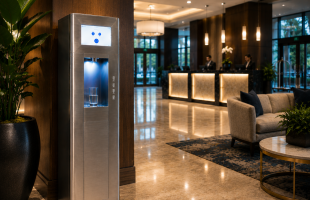


Switching from traditional bottled water service to a bottleless water cooler is a decision that impacts water quality, employee and visitor health, sustainability goals, operational efficiency, and long-term costs. While bottleless water coolers are becoming increasingly popular, not all systems — or providers — are the same.
Before making the switch, it’s important to understand what questions to ask and how different solutions compare.
How Does Filtration Compare to Bottled Water?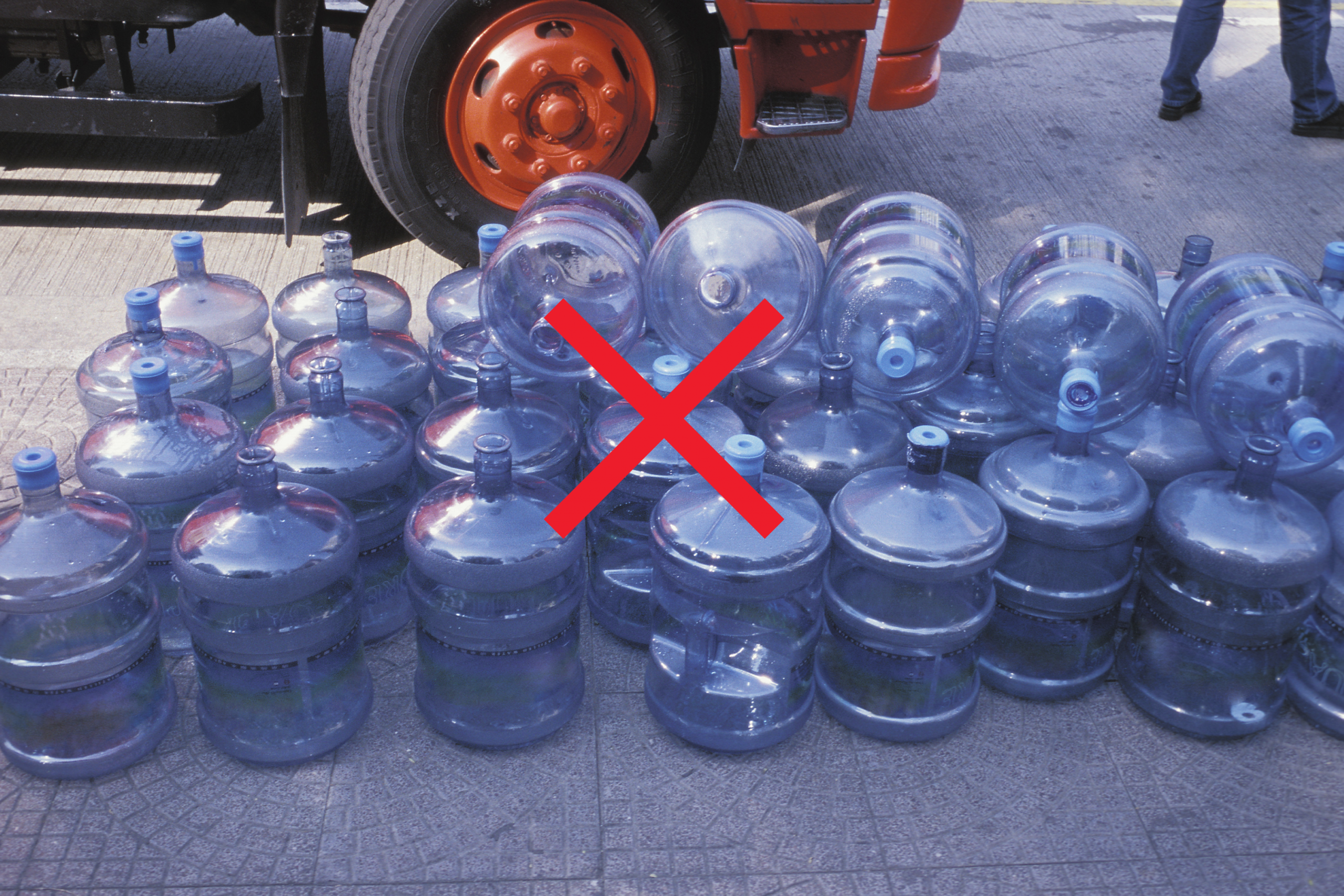
Many bottled water products originate from municipal water sources or natural springs and are treated to meet regulatory standards. However, filtration methods, testing transparency, and long-term storage conditions vary widely by brand.
Bottleless water coolers treat water at the point of use, allowing organizations to select filtration technologies based on their building’s water quality and specific needs.
With Document Solutions bottleless water coolers, customers can choose configurations that include:
- Carbon filtration, designed to reduce chlorine taste and odor and improve overall water palatability
- Sediment filtration, which removes visible particles such as rust, sand, and debris before water reaches finer filtration stages
- Optional reverse osmosis (RO) systems, which use a semi-permeable membrane to significantly reduce dissolved solids and many common contaminants, including substances such as lead and certain PFAS compounds, depending on system design, certification, incoming water quality, and proper maintenance
Reverse osmosis is not necessary in every environment, which is why Document Solutions evaluates site conditions before recommending a specific configuration. When RO is deployed, it is paired with routine service and scheduled filter replacement to help maintain performance over time.
Is the System Designed With Hygiene in Mind?
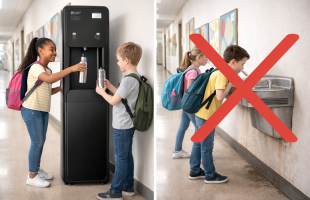
Hygiene is a critical consideration in offices, schools, healthcare facilities, and public buildings — especially in high-traffic areas.
Some bottleless water coolers include features designed to reduce shared touchpoints and improve cleanliness.
Document Solutions offers models with hygiene-focused options such as:
- Touchless sensor-activated dispensing
- Foot-pedal dispensing alternatives
- Enclosed dispensing areas designed to limit external contact
These features can help reduce cross-contact when compared to traditional bottled water dispensers that require manual bottle handling and push-button operation.
What Are the Environmental Benefits of Going Bottleless?

Traditional bottled water service relies on large plastic bottles, delivery trucks, storage space, and repeated handling.
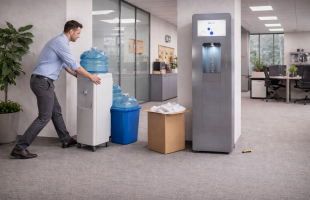
Bottleless water coolers eliminate the need for bottle production, transportation, and disposal by connecting directly to an existing water supply.
Organizations that transition to bottleless systems often experience:
- Reduced plastic waste from five-gallon bottles
- Fewer delivery trucks and associated emissions
- Less physical handling and on-site storage requirements
While environmental impact varies by usage and location, bottleless systems are widely recognized as a more sustainable alternative to bottled water service.
What Temperature Options Are Available?
Modern bottleless water coolers are designed to meet a range of workplace preferences.
Depending on the model selected, Document Solutions coolers can provide:
- Chilled water
- Hot water for beverages
- Room-temperature water
This flexibility allows organizations to support hydration, breakroom needs, and day-to-day convenience from a single system.
What Makes Document Solutions’ Bottleless Coolers Different?
Not all bottleless water providers offer the same level of customization, service, or transparency.
Document Solutions differentiates itself by focusing on:
- Model-specific filtration options, rather than one-size-fits-all claims
- Professional installation, ensuring systems are properly connected, configured, and tested
- Ongoing maintenance and scheduled filter replacement, which is essential to sustained water quality
- Clear documentation, including available third-party certifications (such as NSF/ANSI standards) for specific components when applicable
Rather than making broad claims about “guaranteed” water quality, Document Solutions focuses on selecting the right technology for each environment and maintaining it properly over time.
Frequently Asked Questions
How does a bottleless water cooler work?
A bottleless water cooler connects directly to a building’s existing water line and treats water through internal filtration before dispensing.
Is bottleless water cleaner than bottled water?
Water quality depends on filtration technology, incoming water conditions, and ongoing maintenance. Properly specified and serviced bottleless systems can significantly improve taste and reduce many common contaminants compared to untreated tap water.
Does every bottleless cooler include reverse osmosis?
No. Reverse osmosis is optional and recommended based on site conditions, water quality goals, and system requirements. Not every location requires RO to achieve excellent water quality.
Choosing the Right Bottleless Water Cooler
At Document Solutions, we help businesses transition to reliable with unique features that deliver clean, great-tasting water every day.
Switching to bottleless water is about more than convenience. It’s about making informed, long-term decisions around water quality, sustainability, hygiene, and operational efficiency.
By understanding filtration options, hygiene features, environmental impact, and service expectations, organizations can choose a system designed for reliable performance — not just marketing promises.
Document Solutions works with organizations to evaluate, install, and maintain bottleless water coolers tailored to their specific environment. To learn more, call us at (888) 880-3377 or fill out the form below!
- Categories: