
Printing is essential in many workplaces, but that does not mean every page being printed adds value. In many offices, unnecessary printing happens quietly over time. Teams print multiple copies of the same file, color output gets used where black and white would work, and devices are spread across departments without a clear understanding of what is actually being used.
That is where print analytics becomes valuable.
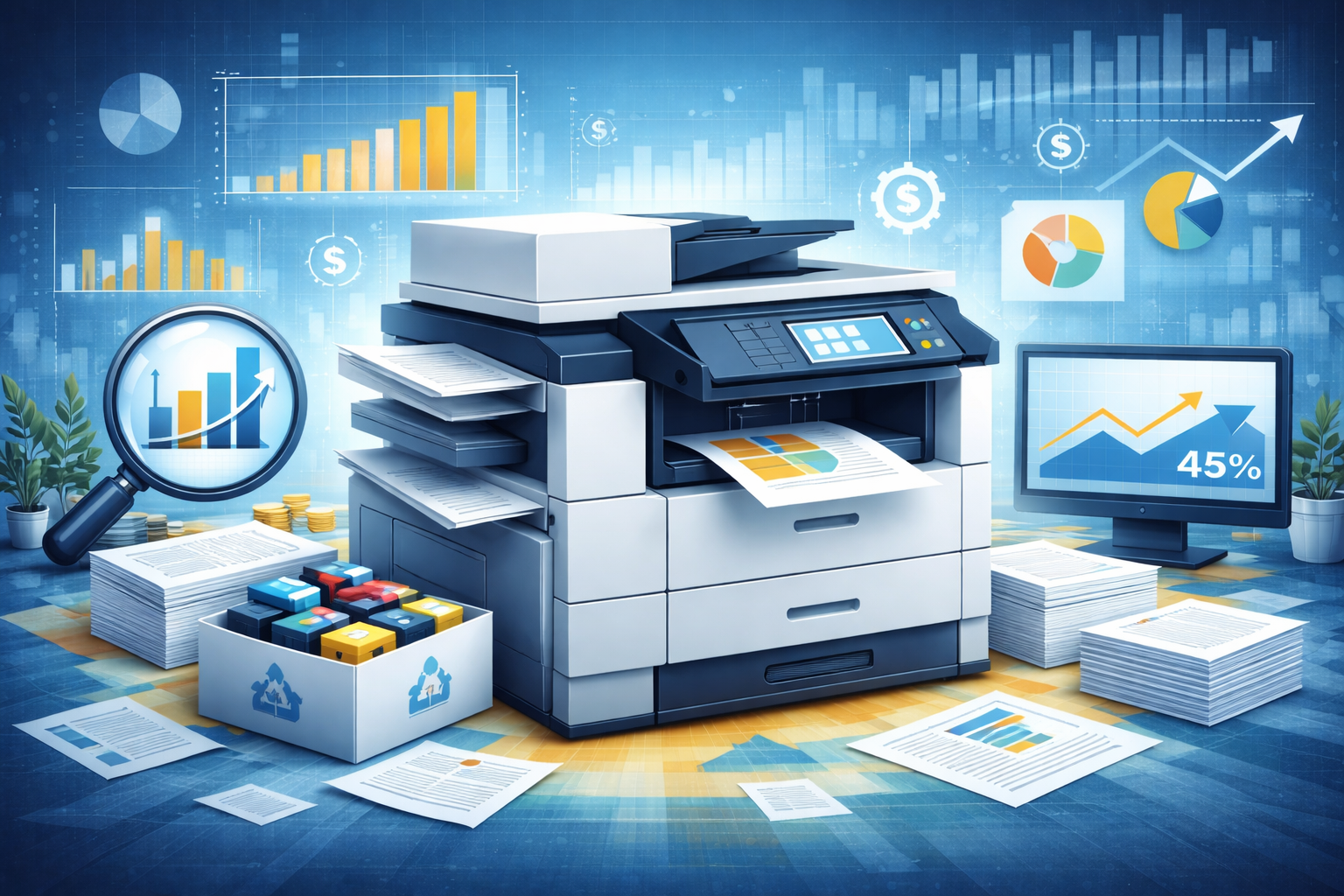
Print analytics gives businesses a clearer view of print behavior across their organization. Instead of guessing where waste is happening, leaders can use real usage data to make smarter decisions. The result is often lower print costs, better device utilization, less paper waste, and a more efficient print environment overall.
For organizations looking to improve office printing without disrupting day to day operations, print analytics can be one of the most practical tools available. It supports better decisions, better workflows, and better control.
If your business is reviewing its current print setup, Document Solutions offers copiers and printers that can support a more efficient and data-driven print environment.
What Is Print Analytics?
Print analytics is the process of tracking and analyzing print activity across your office or organization which can be done directly through certain printers and/or with additional services that Document Solutions offers like PrintFleet and PaperCut.
Depending on the environment, print analytics may help monitor:
- Total print volume
- Black and white versus color printing
- Device usage by department or user group
- Peak printing times
- One-sided versus two-sided printing
- Print, copy, and scan trends over time
- Underused or overused devices
The goal is not to make printing harder. The goal is to make printing smarter.
When businesses can see how printing is actually happening, they are in a much better position to reduce waste without slowing employees down.
Why Businesses End Up Printing More Than They Need
Unnecessary printing is often not caused by one major issue. It usually comes from a mix of small habits and limited visibility.
For example, businesses may find that:
- Employees print emails, drafts, or reference documents that could stay digital
- Color printing is being used for internal documents that do not require it
- Large jobs are sent to small desktop devices instead of more efficient shared systems
- Duplicate prints happen because of workflow confusion
- Departments do not realize how much they are printing month to month
Without reporting, these patterns are easy to miss. The office simply keeps printing, and costs keep adding up in paper, toner, service, and time.
Print analytics helps bring those patterns into view in a positive, actionable way.
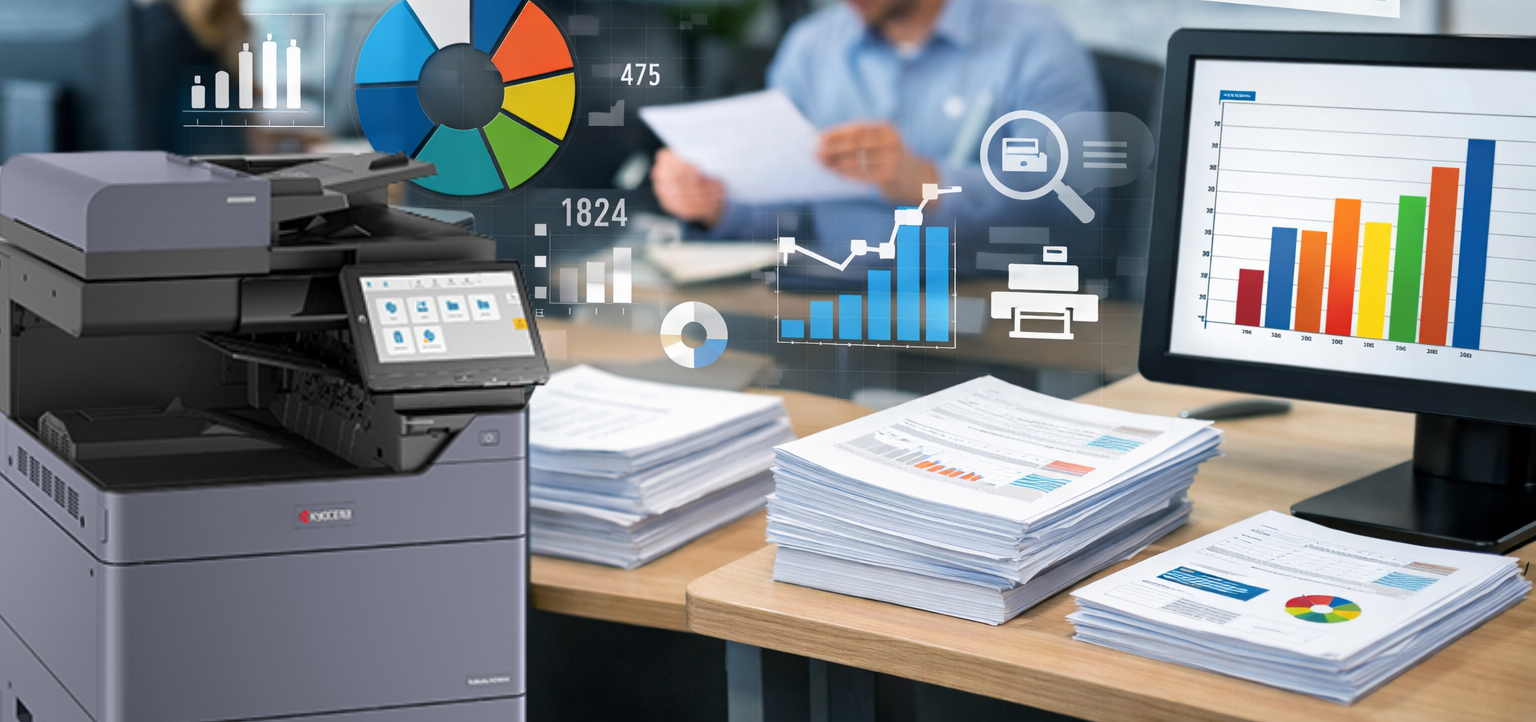
How Print Analytics Reduces Unnecessary Printing
1. It reveals where print volume is highest
One of the first benefits of print analytics is basic visibility. Leaders can see which departments, teams, or devices are responsible for the most output.
That matters because high print volume is not always a problem. In some cases, it is necessary. But when print volume is higher than expected, analytics helps businesses ask the right questions:
- Are these prints essential?
- Are employees printing multiple drafts unnecessarily?
- Could some of these workflows move to digital sharing or scanning?
- Is the workload being routed to the right device?
This kind of insight helps businesses reduce excess printing without making broad assumptions.
2. It identifies costly color usage
Color printing is often more expensive than black and white printing. When used for client-facing materials, presentations, or branded documents, that cost may be justified. But in many offices, color is also used for internal documents where it adds little value.
Print analytics can help businesses understand:
- How much color printing is happening
- Which devices are producing the most color output
- Whether color use aligns with business needs
That makes it easier to set thoughtful print policies, encourage more intentional use, and lower avoidable costs.
3. It supports better device placement and usage
In some offices, one printer is overworked while another is barely used. In others, employees rely on personal desktop printers even when shared multifunction devices could handle jobs more efficiently.
Analytics can show whether devices are being used appropriately and whether your fleet is aligned with actual demand.
This can lead to smarter decisions such as:
- Consolidating unnecessary devices
- Moving devices closer to high-volume teams
- Replacing outdated equipment with better-fit systems
- Routing larger jobs to more efficient multifunction printers
That is one reason businesses often pair print analytics with a review of their broader print environment. Document Solutions helps businesses evaluate office copier and printer solutions that support productivity and control.
4. It encourages better print habits over time
When businesses have access to reporting, it becomes easier to improve habits gradually.
For example, a company might discover that duplex printing is underused. A simple adjustment to default settings can reduce paper use. Another business may notice repeated large internal print jobs and choose to shift some of those communications to digital workflows.
These are not dramatic changes. They are practical improvements based on real information.
That is what makes print analytics so effective. It helps businesses improve without relying on guesswork.
5. It creates a stronger foundation for cost control
Printing expenses are often spread across supplies, service, device usage, and employee behavior. That can make them harder to manage than they appear at first glance.
Print analytics helps connect those dots.
When leaders can see usage clearly, they are better equipped to:
- Budget more accurately
- Reduce avoidable supply consumption
- Right-size their print fleet
- Support long-term efficiency goals
- Spot trends before they become larger cost issues
In other words, analytics turns printing from a hidden overhead category into something measurable and manageable.
The Business Benefits Go Beyond Cost Savings
Reducing unnecessary printing is important, but the value of print analytics goes further than that.
A more informed print strategy can also support:
- Better workflow efficiency
- Less strain on heavily used devices
- Improved sustainability efforts through reduced paper waste
- More consistent print policies across teams
- A clearer understanding of when to upgrade or reconfigure equipment
For growing businesses, this matters. As office needs evolve, print analytics helps make sure your print environment evolves with them.
What Businesses Should Look for in a Print Analytics Strategy
If your organization is considering print analytics, the best approach is one that stays simple and useful.
Look for a strategy that helps you answer practical questions such as:
- Which devices are used most often?
- Where is print volume increasing?
- How much color output is happening?
- Are employees using the right devices for the right tasks?
- Are there clear opportunities to reduce waste without affecting productivity?
The purpose is not to collect data for the sake of data. It is to turn everyday printing into something more intentional, efficient, and cost effective.
FAQ: How Print Analytics Helps Reduce Unnecessary Printing
What is the main purpose of print analytics?
The main purpose of print analytics is to help businesses understand how printing is being used across their organization. It tracks usage patterns so leaders can reduce waste, control costs, and improve efficiency.
Can print analytics help lower printing costs?
Yes. Print analytics can help lower costs by identifying unnecessary printing, excessive color usage, underused devices, and opportunities to improve print workflows.
How does print analytics support sustainability?
By helping businesses reduce unnecessary pages, improve duplex printing habits, and optimize device use, print analytics can support lower paper consumption and less avoidable waste.
Make Printing More Efficient with Better Visibility
Many businesses are not printing too much on purpose. They simply do not have a clear view of what is happening across their print environment.
That is why print analytics matters.
It gives decision-makers the visibility to reduce unnecessary printing, manage costs more effectively, and create a more efficient office without making printing more complicated for employees.
If your business is ready to take a smarter approach to printing, explore Document Solutions’ copiers, printers, and print management services (PrintFleet and PaperCut). Call us at (888) 880-3377 or fill out the form below for more information. Learn how the right print environment can support better performance across your workplace.
- Categories: